


Key Takeaways
Joanne Barela v. Deloitte Consulting LLP
Deloitte tells prospective US employees:
“We care about our employees.”
Its recruitment material continues:
“That’s why rather than just say it, we show it.”
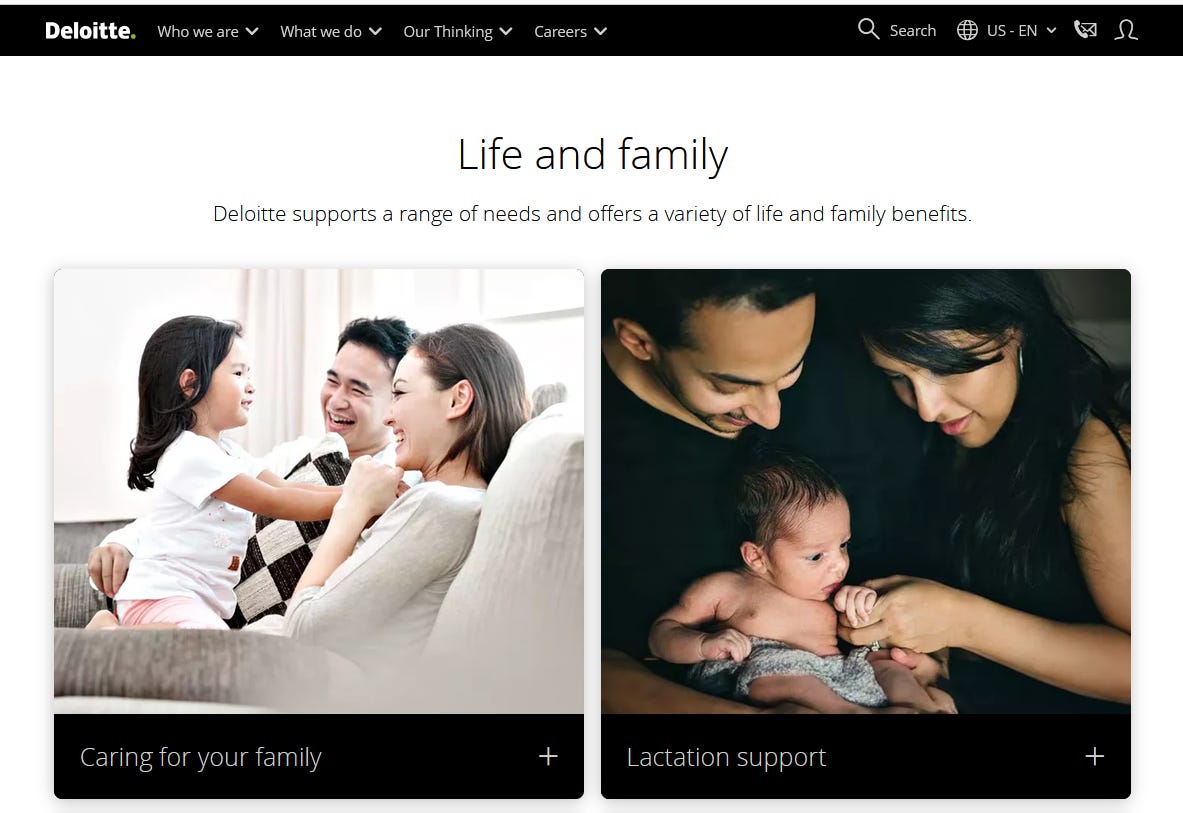
The firm’s benefits pages promote parental leave, family leave, reproductive-health support, emergency dependent care and time off intended to help employees “rest, recharge, and thrive both inside and outside of work.”
Deloitte invites prospective employees to judge its commitment by its actions. (Deloitte US Employee Well-Being; Deloitte US Benefits and Rewards)
A proposed class action filed in California now challenges what happens when employees use the leave Deloitte advertises.
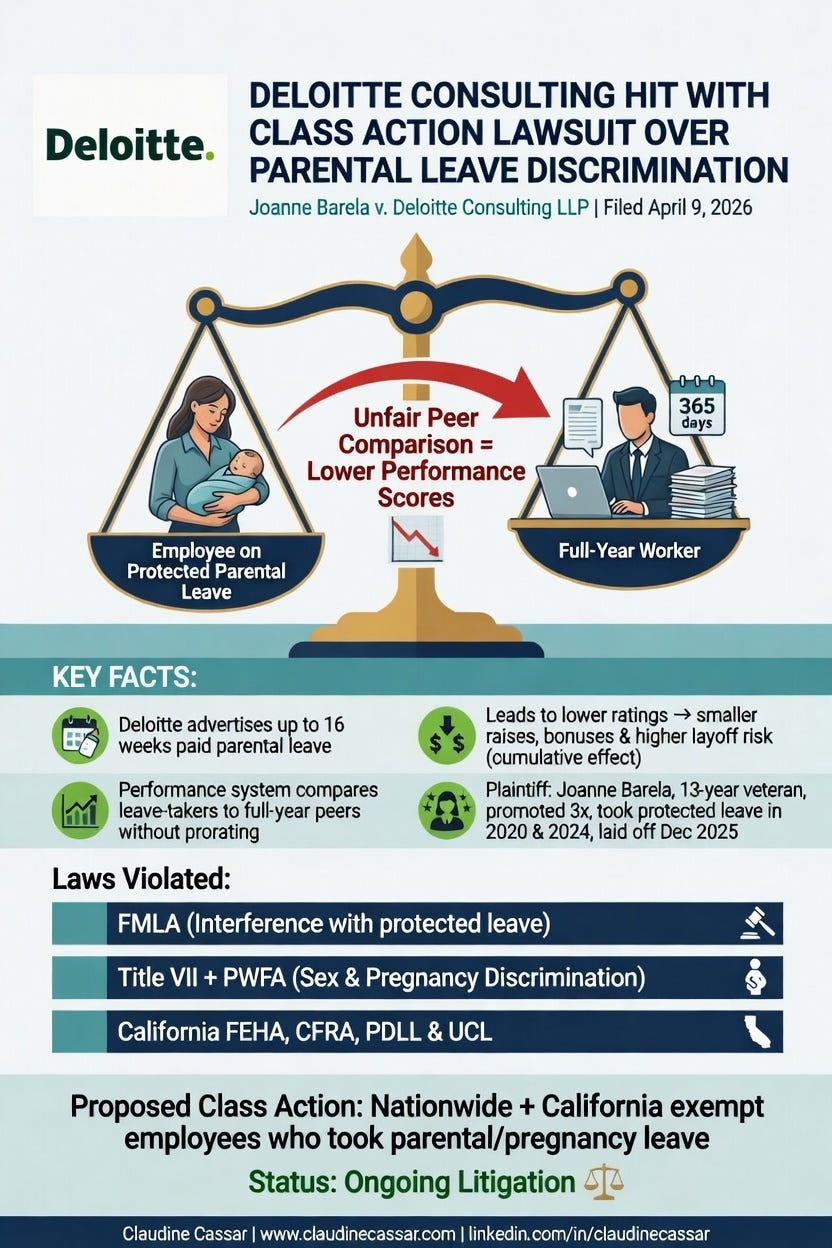
Joanne Barela, a former senior manager in Deloitte’s Human Capital Consulting practice, alleges that Deloitte’s performance-management system disadvantaged employees who took parental, pregnancy or pregnancy-disability leave.
Her complaint states:
“What Deloitte does not advertise is that employees who take parental leave are penalized for taking that leave.”
Barela alleges that employees who took protected leave were assessed according to the “impact” they generated during the year and compared with colleagues who had worked for all 12 months.
Because Deloitte tied those assessments to annual salary increases and bonuses, the complaint says employees who took leave received lower compensation than otherwise comparable employees.
The alleged result was that:
“Those who use leave are systematically paid less.”
Barela seeks to represent nationwide and California classes of exempt Deloitte employees who took parental, pregnancy or pregnancy-disability leave, together with subclasses of women.
Her original complaint asserted claims under the Family and Medical Leave Act, Title VII, the Pregnant Workers Fairness Act and several California employment laws.
Barela filed an amended complaint on May 27, 2026.
These remain allegations. No court has determined that Deloitte unlawfully penalised employees for taking leave, and the proposed classes have not been certified.
Deloitte is contesting the claims and filed a motion to dismiss the amended complaint on June 18, 2026. (Original Class Action Complaint; Public Docket)
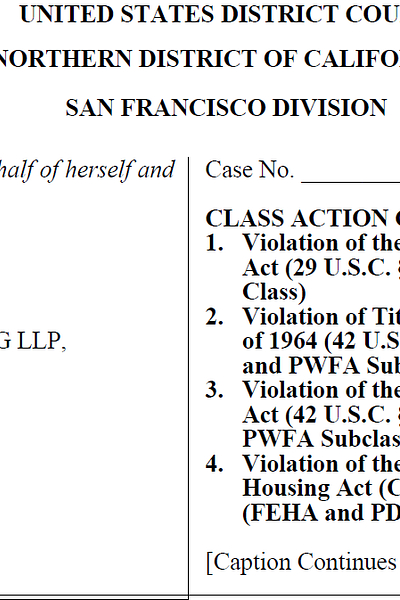
Comparing Part of a Year With the Whole Year
Barela joined Deloitte in 2013 and remained with the firm until December 2025.
During that period, she was promoted from consultant to senior consultant, manager and finally senior manager. She alleges that she was consistently assessed as performing above the level of many of her peers.
There were two significant exceptions: the two performance years most affected by her longest periods of pregnancy-related and parental leave.
Barela took approximately 30 weeks of leave between March and September 2020. She took another 34 weeks between May and December 2023, followed by five additional weeks at the beginning of 2024.
The complaint alleges that she received only “Strong” assessments across all performance dimensions in the two years affected by her extended leave. In the other relevant years, she received combinations of “Strong” and “Exceptional” ratings.
The alleged problem was not that Deloitte formally deducted points for taking leave.
It was that the firm evaluated the impact produced by an employee who had worked for part of the year against the impact produced by colleagues who had worked throughout it.
Deloitte’s assessment system, according to the complaint, considered client performance, marketplace or firm contribution, leadership and teaming. For senior managers, it could also incorporate sales, margin, managed revenue, utilisation and feedback from colleagues.
Those assessments were primary factors in determining salary increases and annual incentive awards.
A system of that kind may appear neutral. Everyone is assessed against the same performance dimensions.
Barela alleges, however, that it produces an unequal result because employees are not given the same amount of time in which to generate the impact being compared.
An employee who has eight months in which to develop client relationships, make sales and demonstrate internal leadership cannot readily produce the same annual total as a colleague who has 12.
The leave does not need to appear as the formal reason for a lower rating. Its consequences are already embedded in the numbers being compared.
Because each salary increase builds on an employee’s existing base salary, Barela argues that the disadvantage compounds. A lower increase in one year reduces the starting point for the next and may continue depressing compensation after the employee returns.
Millions in Sales — Then a Reduction in Force
Barela’s allegations are especially notable because she claims that her commercial performance substantially exceeded Deloitte’s expectations.
In Deloitte’s Performance Management Year 2025—which primarily assessed work performed during calendar year 2024 and included approximately six weeks of protected leave—Barela says she generated $18.3 million in sales against a $5 million annual target.
In Performance Management Year 2026, she alleges that she generated $16.4 million by the end of the third quarter, again substantially exceeding the full-year target.
Her most recently completed assessment placed her in Deloitte’s “High” performing category. She received a salary increase of $9,100 and a bonus of $37,700.
Nevertheless, on December 2, 2025, Barela was told that she had been selected for termination as part of a company-wide reduction in force. Her employment ended on December 30.
Barela says she was informed that the selection process involved numerical comparisons and a multi-year review of employee metrics.
She understood those metrics to include the performance ratings that, according to her complaint, had already been affected by the way Deloitte assessed employees who took leave.

Did Deloitte Count Leave as Time Without Promotion?
Barela also alleges that Deloitte may have considered how long she had remained at senior-manager level.
According to the complaint, Deloitte generally expects senior managers to progress to partner, principal or managing director within four to six years.
By December 2025, Barela had formally held the senior-manager title for 6.3 years. Approximately 1.3 of those years, however, had been spent on approved leave.
Excluding that time, Barela had actively worked as a senior manager for approximately five years—within the promotion period described in the complaint.
If the full 6.3 years were considered, protected leave could effectively count against her twice.
First, it reduced the time available to generate annual impact. Second, it potentially made her appear to have remained too long at her grade.
The case therefore concerns more than the number of weeks of parental leave formally available.
It concerns whether the systems surrounding that leave—performance, pay, promotion and redundancy selection—properly account for the employee’s absence.
A Former Deloitte Employee Describes a Similar Experience
Other people have described similar experiences. Big4News has also spoken with a former Deloitte US employee who says he suffered professional disadvantage after using parental leave and was later made redundant.
His account has not been tested in court and cannot establish why Deloitte made any particular employment decision. It nevertheless provides relevant context for the structural problem alleged in Barela’s complaint.
One former Deloitte US employee told Big4News that, before beginning parental leave, a partner strongly encouraged him to take the full period available.
He was told that many male employees failed to use the benefit fully and that he should take the opportunity to bond with his son.
He followed that advice.
When he returned, he said his standing within the practice appeared to have changed:
“It felt like I was a black sheep in the group.”
He subsequently spent 19 weeks without a client assignment.
The employee said he was repeatedly told that he needed to do more to find work. When he questioned why he was being held responsible while engagement leaders, his coach and resource-management contacts failed to respond to messages or attend meetings, he says he was accused of causing “too many waves.”
He eventually obtained short periods of client and internal work but remained largely unstaffed.
He was later invited to an unexpected meeting with HR and informed that he was being laid off with ten weeks of severance.
Reflecting on his experience, he told Big4News:
“I saw that the firm only cared about you when you were delivering revenue to them.
“They didn’t care about your development. They didn’t care about your wellbeing. They just cared that you brought in the dollars.”
Big4News verified the source’s former employment at Deloitte but could not independently verify every aspect of his account. Factors unrelated to parental leave may have contributed to his periods on the bench and eventual termination.
The relevance of his account lies in the similar sequence he describes. He was encouraged to take the benefit. He returned to diminished access to billable work. He was later selected for redundancy.
Employees Described Similar Experiences Before the Lawsuit
A review by Big4News found numerous Reddit posts from people identifying themselves as current or former Deloitte employees who described difficulties associated with parental, maternity or pregnancy-related leave.
Reddit accounts are anonymous. Big4News could not independently verify the posters’ identities, employment histories or the reasons for the decisions they described.
The posts should not be treated as proof.
Their relevance lies in their similarity and in the fact that several were published years before Barela filed her lawsuit.
Projects Withdrawn and Roles Filled
In a 2023 post, an employee described themselves as a high performer whose project had recently ended.
The employee said they had successfully interviewed for several new engagements and were initially told that they were a strong fit. Once they disclosed that they would soon take paternity leave, however, the projects allegedly rejected them.
Another commenter said they had gone on maternity leave after training a replacement and, on returning, were told that the project would retain the replacement instead. (Original post and comment)
In a separate account, an employee said they returned from FMLA leave in 2024 and were told that their previous job had ended and they had been replaced.
They remained on the bench while attempting to secure another assignment. (FMLA return and bench account)
In each case, the alleged vulnerability arose not through dismissal during leave, but through the absence of a secure role on returning.
Leave, Low Utilisation and Layoffs
A 2025 Deloitte layoff-tracker thread included an account of a manager who had reportedly spent ten years at the firm and had a history of exceptional ratings.
According to the commenter, the employee experienced low utilisation after pregnancy-related leave, was not staffed after returning and received lower ratings for the latest performance year. (Manager leave and utilisation account)
Another commenter described a senior consultant who had worked at Deloitte for 14 years and was laid off after returning from maternity leave to the bench. The stated reason allegedly included low utilisation. (Senior consultant layoff account)

These accounts do not establish that leave caused either termination.
They do show that employees were publicly describing the same sequence before Barela sued: protected leave, return to the bench, lower utilisation and eventual redundancy.
Employees Say Their Ratings Changed
After news of the Barela lawsuit reached Reddit, several commenters said the allegations reflected their own experience.
One claimed that two partners or managing directors told them their assessment had been downgraded because they had been on leave earlier in the year. (Performance-rating comment)

Another described themselves as a top performer before maternity leave and said they received bottom-level marks on returning. (Maternity-leave rating comment)

Other employees reported positive experiences.
Some said Deloitte adjusted utilisation appropriately, that leave did not harm their ratings or promotion and that they had seen colleagues promoted after taking substantial parental leave.
That counterevidence matters. It suggests that experiences may differ between practices, projects, leaders and individual sponsors.
But inconsistency can itself be a governance problem.
A benefit that is safe to use only when an employee has a powerful sponsor or a secure long-term engagement is not being protected by a dependable firm-wide system.
Big4News Analysis
How Protected Leave Becomes an Apparently Neutral Metric
The central allegation in the Barela case is more serious than a temporary reduction in utilisation.
The complaint alleges that Deloitte compared the overall annual impact of employees who took protected leave with that of colleagues who worked throughout the year.
During the leave period, colleagues continue accumulating client feedback, managed revenue, sales, internal contributions and other evidence of annual impact.
The returning employee then faces one of two situations.
In the best case, they are immediately staffed and fully utilised. Even then, they have had fewer working months in which to generate the same annual impact as peers who did not take leave. Full utilisation after returning cannot recreate the sales opportunities, client exposure or leadership contributions missed during the absence.
In the worst—and repeatedly reported—scenario, the employee returns to find that their previous role has been filled or that an engagement has continued without them. They are placed on the bench and expected to secure a new assignment. Their utilisation falls. They receive less client feedback and have fewer opportunities to demonstrate leadership, generate sales or contribute to high-profile work.
In either scenario, the employee is being asked to catch up in a race that continued while they were away.
If the broader assessment is not adjusted for the opportunity the employee actually had to perform, someone who performed strongly for eight months may still appear to have contributed less than a comparable colleague who worked for 12.
The lower annual total can then be translated into an apparently neutral performance rating.
That rating may affect compensation and future progression. Under Barela’s pleaded theory, it may later reappear within a multi-year comparison used during a reduction in force.
By that stage, parental leave need no longer appear as an explicit factor.
The decision-maker sees lower historic ratings, weaker utilisation, fewer recent client engagements or reduced promotion momentum.
The protected absence has been converted into numbers that appear objective.
A parental-leave benefit is not genuinely protected if employees are permitted to take the time away but are then assessed as though they had never left.
Performative Presence: When Commitment Must Be Seen
These observations cannot establish what happened within Barela’s US practice. They are offered as organisational context for how a formally generous leave policy can interact with cultural expectations about visibility, availability and sacrifice.
The Barela allegations must also be considered against a deeper feature of professional-services culture.
In the Big Four, commitment is not always measured solely through the work an employee completes. It is also performed through visibility, availability and the willingness to allow work to take precedence over private life.
I call this the culture of performative presence.
During my years as a Deloitte partner, I spoke with managers and senior managers in Malta and in other countries who told me that they felt unable to leave the office before the partner did.
Some said they stayed even when their work was complete and they had nothing productive left to do.
Several described playing solitaire or finding other ways to occupy themselves until the partner finally left—simply so that, on the way out, the partner would see that they were still at their desks.
This was not about productivity.
It was a performance of commitment.
The employee’s physical presence communicated that they were serious, ambitious and willing to surrender control over their private time.
Leaving because the day’s work was finished could still be interpreted as insufficient dedication. Staying demonstrated that work—and, by extension, the firm—came first.
The same expectation extended beyond the office.
Employees were expected to attend dinners, drinks and social events organised by the firm; remain responsive outside ordinary working hours; travel at short notice; and rearrange personal plans around client or partner demands.
These activities were not always necessary to complete a particular piece of work.
They formed part of the ritual through which employees demonstrated loyalty, ambition and readiness for advancement.
The deeper message was that successful professionals did not fit work around their lives.
They fitted their lives around work.
The Lionisation of Family Sacrifice
The values behind performative presence were particularly visible in the stories partners told about their families.
At retirement events, I heard senior partners thank their wives for raising their children while they built their careers. Their absence from family life was not recounted as something regrettable, but as evidence of the sacrifice that professional success had required.
Younger partners sometimes boasted that they regularly arrived home after their children were asleep.
One female partner told me that she had returned to work three days after giving birth.
A Deloitte CEO once told me that his wife had called him at around 10 p.m. to ask when he would be coming home. He recalled replying that he owed it to his partners to remain at work for another couple of hours.
These stories communicated what the organisation understood commitment to look like. The message was clear: this is what we expect of you.
The exemplary professional was someone for whom client demands, deadlines and the expectations of other partners consistently outranked private life.
Missing family time demonstrated seriousness.
Remaining continuously available suggested leadership potential.
Sacrifice became part of the mythology of success.
Not every Deloitte partner subscribed to these values, and many employees have experienced supportive leaders and successful careers after taking leave.
But organisational culture is transmitted through the conduct that is admired, the stories that are repeated and the sacrifices that are celebrated.
When partners present absence from their children as proof of professional devotion, they establish a powerful cultural standard for the people below them.
What Taking Parental Leave Is Understood to Reveal
Within that culture, parental leave carries a meaning that goes beyond the number of weeks an employee is absent.
The employee has not merely stepped away from work. They have demonstrated that something else in their life is important enough to take priority over the firm.
Becoming a parent may then trigger assumptions—openly expressed or not—about whether the employee will still work late without notice, travel whenever required, attend evening events, remain available during weekends and family time, and continue to place the firm first.
The leave may be formally encouraged and fully permitted.
Culturally, however, taking it can be interpreted as evidence that the employee will no longer offer the same degree of unrestricted availability.
This is the broader cultural contradiction against which the Barela allegations should be considered.
Deloitte can advertise generous parental leave while operating within a culture that has historically lionised the sacrifice of family life as proof of ambition and commitment.
Nobody needs to tell an employee directly that taking leave will damage their career.
Nobody needs to write “insufficient commitment to the firm” in a performance assessment.
The judgment can emerge indirectly. A returning parent may be regarded as less available for a demanding engagement. A partner may assume that another employee will be more willing to stay late, travel or respond at short notice.
The parent receives fewer opportunities requiring total flexibility and is then assessed against colleagues who received those opportunities.
The cultural judgment becomes a staffing decision.
The staffing decision becomes utilisation, client exposure, sales opportunities and feedback.
Those measures become performance ratings, promotion assessments and redundancy metrics.
A Recruitment Promise Must Be Safe to Use
Deloitte’s benefits are not merely internal administrative arrangements.
They are displayed on the firm’s careers website alongside salary, development, culture and career opportunity. They help persuade talented consultants, accountants and technology specialists to join the firm.
That recruitment message creates an expectation: employees should be able to use the advertised benefit without damaging their careers.
A meaningful parental-leave policy therefore requires more than a generous number of weeks on paper. Returning employees need a credible route back to client work; performance comparisons and promotion clocks must reflect the period actually worked; and redundancy systems must not recycle leave-related disadvantage through apparently neutral metrics.
Most fundamentally, the culture must accept that prioritising a newborn child does not demonstrate that an employee lacks the commitment required to succeed.
Without those protections, a firm can offer generous leave formally while allowing its commercial and cultural systems to undermine it in practice.
When a Benefit Begins to Look Like Recruitment Marketing
Deloitte says:
“We care about our employees.”
Barela alleges:
“What Deloitte does not advertise is that employees who take parental leave are penalized.”
Many Deloitte employees report positive experiences, including adjusted utilisation, supportive leaders and promotion after leave. Those accounts should not be ignored.
But the lawsuit, the former employee who spoke directly to Big4News and the older online accounts raise a serious question about consistency.
Barela’s complaint is not the only account describing this sequence. The deeper issue is whether Deloitte can meaningfully offer parental leave while continuing to treat unrestricted availability and the sacrifice of family life as markers of professional commitment.
Employees have reported returning from parental or pregnancy-related leave to find their roles filled, their pipelines empty, their utilisation falling and their job security deteriorating.
That does not establish a centrally designed policy of discrimination, but it reveals a recurring pattern within the employee accounts reviewed by Big4News that warrants scrutiny.
A benefit advertised to recruit employees—but not protected from the firm’s staffing, performance, promotion and redundancy systems—begins to look less like employee support and more like recruitment marketing.
The real test of Deloitte’s parental-leave policy is therefore not how generous it appears on a careers page.
It is whether employees can use it without being marked as less committed—and still have a career when they return.
NB: This article reports on allegations in an ongoing proposed class action. No court has ruled on the merits. Deloitte contests the claims and has moved to dismiss the amended complaint.
Barela seeks to represent nationwide and California classes of exempt Deloitte employees who took parental, pregnancy or pregnancy-disability leave, together with subclasses of women. Her complaint asserts claims under federal and California employment laws and seeks damages, changes to Deloitte’s employment practices and her reinstatement. The proposed classes have not been certified.
Big4News contacted Deloitte, provided a summary of the allegations and invited the firm to respond. No response had been received by the publication deadline.
This article is part of Big4News’ Case Watch series. Case Watch tracks significant regulatory investigations, enforcement actions and litigation involving Deloitte, PwC, EY and KPMG, focusing on matters that shed light on internal culture, governance and accountability.
Sources
Court Documents and Docket
Barela v. Deloitte Consulting LLP — Class Action Complaint, April 9, 2026
Barela v. Deloitte Consulting LLP — Amended Class Action Complaint, ECF No. 19, 27 May 2026
Deloitte Consulting LLP — Motion to Dismiss the Amended Complaint and/or Strike or Redefine the Class Allegations, ECF No. 20, 18 June 2026
Deloitte Recruitment and Benefits Material
About Claudine Cassar

I’m a corporate anthropologist and former Deloitte equity partner. I sold my technology business to Deloitte in 2016 and led the Malta Consulting team for five years. I am the founder and editor of Big4News, which provides independent, clear analysis of PwC, Deloitte, EY, and KPMG — free from corporate spin.
Find me on LinkedIn, X, Instagram, or my author website.
Feel free to reply to this newsletter — I read every reply.