


This timeline is a live document and continues to be updated as new developments emerge.
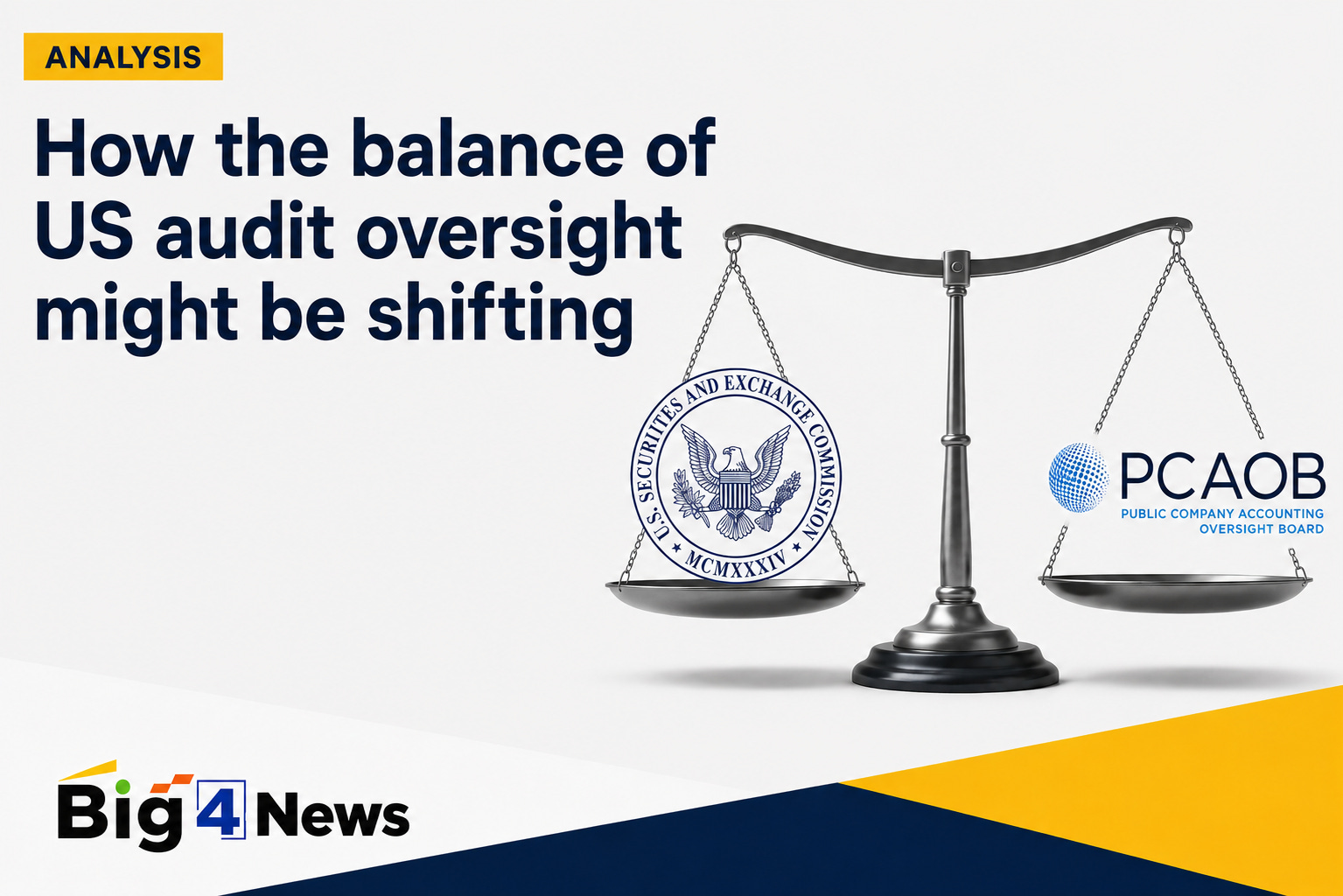
Two Regulators Born from Two Crises
In 1932, a US Senate Banking Committee inquiry, commonly referred to as the Pecora Commission, began examining the practices that had contributed to the 1929 Wall Street Crash, one of the principal catalysts of the Great Depression. The inquiry exposed widespread fraud and abuse on Wall Street, ranging from insider dealing and share-price manipulation to misleading financial disclosures that failed to explain adequately the risks associated with investments.
In response, President Franklin D. Roosevelt signed the Securities Act of 1933 and the Securities Exchange Act of 1934. The former imposed disclosure requirements on companies selling securities to the public, while the latter created the U.S. Securities and Exchange Commission. The SEC’s central remit was to regulate the securities markets, enforce the federal securities laws and restore public confidence in the financial markets.
Nearly seven decades later, another wave of corporate collapses exposed a different weakness in the US financial-reporting system. The failures of Enron and WorldCom revealed not only serious accounting misconduct by public companies, but also profound shortcomings in the auditing profession and the system of professional self-regulation on which it had long relied.
Congress responded by passing the Sarbanes-Oxley Act of 2002. The legislation created the Public Company Accounting Oversight Board, a nonprofit oversight body operating under SEC supervision, to register, inspect, investigate and discipline accounting firms that audit US public companies.
The PCAOB was therefore established to perform a role distinct from that of the SEC. The SEC remained the principal regulator and enforcer of the federal securities laws, while the PCAOB became the specialist body responsible for overseeing the auditors whose work underpins public-company financial reporting.
The decisions that are shifting the balance
10 February 2020 — Trump administration formally proposes folding the PCAOB into the SEC
President Trump’s FY2021 budget contained a specific proposal headed “Consolidate the Public Company Accounting Oversight Board.” It proposed transferring the PCAOB’s functions and responsibilities to the SEC beginning in 2022, arguing that this would reduce regulatory duplication and ambiguity. The proposal projected $580 million of savings over 2021–30.

5 October 2021 — Bill Huizenga turns the idea into legislation
Republican Congressman Bill Huizenga introduced H.R. 5489, the Streamlining Public Company Accounting Oversight Act. The legislation provided that the PCAOB would terminate two years after enactment, with its responsibilities transferred to a new Office of Public Accounting Oversight within the SEC's Office of the Chief Accountant.
21 April 2023 — Project 2025 embeds abolition in a broader conservative programme
Heritage published Mandate for Leadership: The Conservative Promise. Its SEC chapter explicitly recommended abolishing both the PCAOB and FINRA and moving their regulatory functions into the SEC.

One detail is notable in hindsight. In an author's note, chapter author David R. Burton identified Paul Atkins as one of six people who deserved special mention for the preparation of the chapter. The note expressly cautioned, however, that Burton alone assumed responsibility for its content and that the views expressed should not be attributed to any other individual.
2 May 2024 — Huizenga tries again
He reintroduced the Streamlining Public Company Accounting Oversight Act as H.R. 8228.
13 May 2024 — PCAOB adopts QC 1000: a tougher quality-control regime
The PCAOB adopted QC 1000, a new risk-based standard governing the systems accounting firms use to support audit quality. The standard strengthened requirements around governance, risk assessment, monitoring, remediation and accountability.
The standard required firms that audited more than 100 public companies a year to set up an External Quality Control Function performed by one or more outsiders, not firm partners or employees. Its role was to independently evaluate the firm’s significant judgements and conclusions when assessing whether its own quality-control system was effective. The goal was to introduce independent oversight into that process, helping to counter the commercial pressures and structural conflicts that can arise within accounting firms.
December 2024 — the idea becomes much more consequential
Following Trump’s election, the prospect of abolishing or absorbing the PCAOB began to be treated as a realistic possibility rather than a largely dormant Republican proposal.
The Financial Times reported on 3 December 2024 that critics saw an opportunity to weaken or close the PCAOB, connecting the renewed threat to the earlier Trump proposal, Huizenga legislation and Project 2025.
The following day, Trump announced Paul Atkins as his choice to lead the SEC.
April–May 2025: Congress moves to abolish the PCAOB
In April 2025, the House Financial Services Committee advanced legislative text that would have dissolved the PCAOB and transferred its functions to the SEC. The proposal was part of a broader budget reconciliation package rather than a standalone reform of audit oversight.
The proposal prompted unusually direct opposition from former and serving PCAOB officials.
On 1 May 2025, then-chair Erica Williams warned that the Board’s institutional expertise could not simply be transferred elsewhere without creating significant risks for investors.
The integrity of our markets is not inevitable. It takes vigilance to guard against negligence, recklessness, and fraud that threaten our system and the people who depend on it.
The PCAOB plays a vital role in that effort – a role our talented and dedicated staff have developed over decades, building unique experience and expertise that cannot be simply cut and pasted elsewhere without significant risk to investors at a time when markets are already volatile, and investors have so much to lose.
Erica Williams, speaking at a financial reporting conference in New York.
Board member George Botic, who had previously led the Board’s inspection programme, emphasised that the PCAOB did not merely inspect audits. It also wrote the standards against which those audits were evaluated, creating an effective synergy leading to stronger guidance.
The ability of our inspectors to freely share insights and perspectives with the staff of the Office of the Chief Auditor, I believe, has been invaluable. This coordination facilitates real-time insight on firms’ execution of our audit standards and allows us to quickly issue practical guidance, when warranted.
On 8 May 2025, six former board members—including former chair James Doty and three founding members—wrote to congressional leaders warning that transferring the PCAOB’s responsibilities to the SEC could harm US capital markets. They argued that the SEC, with its much broader mandate, would struggle to reproduce the PCAOB’s specialist expertise and international inspection infrastructure.
We believe strongly that this legislation risks great harm to our capital markets and to the investors and companies that rely on the integrity of the financial reporting that underpins those markets.
Letter from former PCAOB chair James Doty to the leaders of the House Committee on the Budget and the Financial Services Committee.
Former board member Daniel Goelzer went further on 15 May, describing the proposal as “backdoor legislation,” and arguing that the future structure of US auditor oversight deserved full public debate rather than treatment as a minor element of a large budget bill.
Whatever one may think of the PCAOB’s record, the question of its future deserves full public debate. The structure of auditor oversight in the United States should not be treated as just a minor detail in a massive budget bill that addresses many other major issues.
19 May 2025: New SEC Chair Paul Atkins says the SEC could absorb the PCAOB’s work
Congress outsourced those tasks to the PCAOB, and it’s up to Congress to decide where they should be housed. And if they were decided to be merged into the SEC, I think we could handle it and be able to have enough people in the funding to accomplish it because, at least the way the bill is structured, they have thought about that.
Paul Atkins at the SEC Speaks 2025 conference, May 19.
22 May to 19 June 2025: Senate rules block the PCAOB abolition plan
On 22 May 2025, the House of Representatives passed the wider budget reconciliation bill, including the provision that would have abolished the PCAOB and transferred its functions to the SEC.
However, the plan was halted in the Senate on 19 June after the Senate parliamentarian determined that abolishing the PCAOB was principally a regulatory policy change rather than a budgetary measure. Under the Byrd Rule, the provision was therefore vulnerable to a point of order that would have required 60 votes to waive.
The provision was consequently removed from the legislation to expedite the budget reconciliation process, but the signs now are that this was a procedural reprieve rather than a substantive rejection of the proposal.
15–22 July 2025 – PCAOB Chair Erica Williams resigns at the request of SEC Chair Paul Atkins
On 15 July 2025, Erica Williams informed PCAOB staff that SEC Chair Paul Atkins had asked her to resign. Her last day was 22 July 2025. Atkins accepted her resignation the same day and thanked her for her service; George Botic was named Acting Chair the following day.
Williams had led the PCAOB since January 2022 (reappointed in 2024). Under her leadership the Board pursued a more assertive approach toward the large audit firms, including the Big Four. This included record enforcement penalties, heightened scrutiny of quality-control systems, and a formal focus on firm culture and tone at the top as drivers of audit quality. The profession widely regarded her tenure as tougher and more adversarial than previous periods.
28 August 2025 — PCAOB delays QC 1000 for a year
The PCAOB postponed QC 1000’s effective date from 15 December 2025 to 15 December 2026, saying information from various sources indicated that some firms were encountering implementation challenges that might prove insurmountable within the original timetable.
The delay followed a July 2025 request from the Center for Audit Quality, representing public-company audit firms, which urged the PCAOB to defer implementation and consider targeted amendments addressing scalability and unintended consequences.
19 December 2025 – PCAOB Board approves reduced budget, including steep pay cuts for top earners
The PCAOB Board unanimously approved its 2026 budget of $362.1 million, 9.4% lower than the 2025 budget. The cost reduction measures included salary reductions - a 52% salary cut for the Chair, 42% salary cut for board members, and undisclosed cuts in salaries paid to the most highly compensated senior staff (while most staff were unaffected).
Former founding PCAOB Board member Daniel Goelzer publicly analysed the consequences of the compensation reductions, particularly for senior staff:
On senior staff turnover and institutional knowledge:
In the long run, lower senior staff salaries are likely to increase turnover.
Traditionally, the PCAOB’s senior staff has experienced relatively low voluntary turnover. This has helped to build and maintain institutional knowledge and experience.
However, cutting senior staff pay could destabilize the staff and undermine institutional knowledge.
Goelzer further noted that the new compensation levels could shift interest toward near-retirement professionals or more junior candidates. The combined effect of these cuts risks making the PCAOB less able to attract and retain the highly experienced specialists it needs to effectively oversee and challenge the audit firms.
22 January 2026: PCAOB budget approved by the SEC
On 22 January, the SEC approved the PCAOB budget of $362.1 million for 2026.
I support this budget and recognize its importance as an initial step in refocusing the PCAOB on its core mission.
SEC Chair Paul Atkins said that regulators had to assess whether their approaches delivered benefits to investors without imposing excessive burdens on business.
Both during my time as a Commissioner and now as Chairman, I have recognized–and continue to recognize–the importance of driving improvements in audit quality. Nevertheless, all regulators, including the Commission and the PCAOB, must continually assess how and whether current approaches to fulfilling the Board’s responsibilities provide benefits to investors without imposing excessive burdens on businesses. For the Commission, its diligent oversight of the PCAOB is a crucial check on the considerable authority that the Board holds over audit firms and the risks of potentially excessive burdens.
His preferred direction was clear. SEC oversight was to be an important check against potentially excessive regulatory burdens. The PCAOB should return to basics, reduce unnecessarily complex regulation and concentrate on the integrity and objectivity of the accounting profession.
30 January 2026 – SEC appoints Demetrios (“Jim”) Logothetis as PCAOB Chair
The SEC appointed Demetrios (Jim) Logothetis as the new Chairman of the PCAOB, along with three other new Board members. He was sworn in on 10 February 2026. His term runs until 24 October 2030. George Botic, who had been serving as Acting Chair, remained on the Board.
Logothetis is a retired Ernst & Young partner who spent 40 years at the firm (1979–2019). He held senior leadership roles including Vice-Chair of Global Accounts, Managing Partner of the Midwest U.S. assurance and advisory practices, and Chairman of the German Business Center in the United States. He led audits of major clients such as Coca-Cola, Fiat Chrysler and Whirlpool. He is the first career public-company auditor to serve as permanent PCAOB Chair.
The appointment completed the leadership overhaul that began with the forced resignation of Erica Williams in July 2025 and formed part of the broader shift in the PCAOB’s direction under SEC Chair Paul Atkins.
19 March 2026: The SEC begins recruiting for a “SOX Group”
Less than two months later, Reuters reported that the SEC was creating a new in-house enforcement team focused on accounting and auditing violations — while cutting staff at the PCAOB.
The existence of the team first became public through a federal recruitment notice. The Enforcement Division was seeking a senior attorney and manager for what the advertisement called its “SOX Group,” referring to the Sarbanes-Oxley Act enacted after the collapses of Enron and WorldCom. The new group was being established to:
"investigate and litigate matters involving potential violations of auditing and related professional standards and provisions of the Sarbanes-Oxley Act and other relevant federal securities laws."
The timing is difficult to ignore. The regulator responsible for inspecting and disciplining public-company audit firms was being reduced while its supervising agency was hiring lawyers to build an accounting and auditor enforcement group of its own.
31 March 2026: PCAOB opens consultation on its future priorities
The PCAOB asked stakeholders for input on the priorities that should shape its 2026–2030 strategic plan, including inspections, standard-setting, technology and transparency.
The consultation went directly to the question of how the Board should deploy its resources and define its future role. It closed on 15 May, and the PCAOB later said the responses helped inform the draft strategic plan published in July.
14 May 2026: wider restructuring emerges at the PCAOB
The Financial Times reported that the PCAOB was considering substantial reductions in its inspection and enforcement staff as part of a broader overhaul encouraged by the SEC.
Kurt Hohl, the SEC’s chief accountant, said that one option under consideration was for the PCAOB to withdraw from areas of enforcement that overlap with powers held by the SEC. Separately, the Board was considering placing less emphasis on individual audit engagements and more on firms’ systems of quality control, while continuing to use engagement reviews to test those systems and examine higher-risk audit work.
That would make the PCAOB’s inspection programme more systems-focused. Rather than treating each engagement principally as a standalone test of whether a particular audit complied with professional standards, inspectors would use engagement reviews partly to assess whether the firm’s wider quality-control system is capable of identifying, preventing and remediating recurring audit-quality problems.
This means that the PCAOB would be looking for different types of failures in audit firms. A review of an individual engagement can expose deficiencies in areas such as audit evidence, supervision, professional scepticism or consultation. A quality-control assessment asks a broader question: whether the firm has effective processes for identifying those risks across its audit practice and correcting weaknesses when they emerge. Individual audits would therefore remain important, but increasingly as evidence about whether the wider system is functioning as intended.
This approach has its risks. Firm-wide controls can appear satisfactory on paper while individual audits fail in practice.
By May, therefore, the possible outline of a new regulatory arrangement was starting to emerge:
a smaller PCAOB operating with more selective inspection and enforcement priorities
inspections increasingly focused on firm-level quality-control systems, with engagement reviews used to test whether those systems work in practice
expanded SEC capacity to investigate and litigate serious accounting and auditor misconduct
May 2026: Timothy Zimmerman joins the SEC
Timothy Zimmerman joined the SEC’s Division of Enforcement in May 2026 as senior adviser to David Woodcock, who had been appointed Enforcement Director a few days prior.
Zimmerman had previously served as an SEC enforcement attorney before spending more than a decade at Gibson Dunn and becoming deputy general counsel at RSM US, giving him first-hand knowledge of how a major accounting firm responds to regulatory investigations and handles issues including document production and privilege.
His recruitment was an early indication that the SEC was building the legal and institutional expertise required to investigate technically difficult audit matters internally, rather than relying entirely on referrals or specialist work conducted elsewhere.
9 June 2026 — PCAOB proposes substantial amendments to QC 1000
The PCAOB proposed nine amendments to QC 1000 following implementation discussions with accounting firms and other stakeholders.
Among the proposed changes, the Board would:
eliminate the requirement for the largest audit firms to maintain an External Quality Control Function
narrow the circumstances in which discovering a deficiency on one engagement requires the firm to investigate whether similar deficiencies exist on other engagements
allow firms to take compensating controls into account when determining whether a quality-control deficiency exists
simplify certain metrics requirements
reduce retention of QC documentation from seven years to five
The proposed removal of the External QC Function is particularly significant. Board member George Botic, who had voted for QC 1000 in 2024, said eliminating it altogether was “not a minor adjustment” and warned that the issue went directly to whether the largest firms should be subject to a structural form of independent external oversight.
I will begin with the proposal to rescind the requirement for firms that issue audit reports for more than 100 issuers in a calendar year to have an EQCF. The Supplemental Request for Comment proposes to eliminate the EQCF requirement altogether. In my view, that is not a minor adjustment. It raises a significant question about whether those firms that have the greatest reach in our capital markets should be subject to a structural form of independent external oversight within their quality control framework…
The Supplemental Request for Comment reflects information suggesting that implementation of the EQCF requirement may be more difficult and more costly than originally anticipated; I take those concerns seriously. But I do not believe we should lose sight of what could be lost by rescinding the EQCF requirement entirely. For the largest firms, the quality control system is not simply an internal compliance mechanism. It is part of the architecture that supports confidence in the audit reports on which our capital markets depend.
9 July 2026: PCAOB appoints Inspections Modernization Council
The PCAOB announced the members of its newly created Inspections Modernization Council, an external advisory group established to provide perspectives on the Board’s efforts to modernise its inspection programme.
The Council brings together participants with experience across auditing, audit committees, investing and financial reporting. Its creation added another strand to the wider reconsideration of how PCAOB inspections should operate, alongside the proposals already emerging to place greater emphasis on firms’ systems of quality control.
20 July 2026: the PCAOB sets out its proposed direction
The PCAOB’s draft strategic plan for 2026–2030 provided the clearest official account of how its own role may change.

Under the plan, the Board would modernise its inspection programme by concentrating on firms’ systems of quality control. It would assess how firms design, implement and operate controls intended to support audit quality, identify risks, remediate deficiencies and prevent their recurrence.
The enforcement section of the plan also signalled a change in emphasis. The PCAOB said that it intended to direct its resources towards significant violations presenting substantial risks to investors and market integrity. Engagement reviews are retained as supplements, and the PCAOB will still have an enforcement program.
This raises an interesting question. What will happen to cases that no longer qualify as sufficiently serious?
5 August 2026: the SEC formally establishes the Financial Reporting and Accounting Unit
On 5 August 2026, the US Securities and Exchange Commission announced the creation of a specialist enforcement unit for accounting, financial reporting and auditing.
The Securities and Exchange Commission today announced it is establishing a new specialized unit within the Division of Enforcement to provide the dedicated expertise, focus, and capacity to pursue accounting and financial reporting fraud cases as well as general misconduct in the accounting and auditing areas.
Press Release - SEC Establishes Financial Reporting and Accounting Unit in Enforcement Division
The remit was broader than the recruitment adverts had indicated in March. According to the announcement, the unit would supply specialist capacity to pursue accounting and financial-reporting fraud, together with misconduct across accounting and auditing.
The unit will contain specialist lawyers and accountants. Bloomberg Tax subsequently supplied detail absent from the SEC release: two teams of attorneys and one team of accountants will be assigned to it, using both existing personnel and new hires.
Woodcock told Bloomberg Tax that accounting and audit cases were technically difficult. Staff may have to unwind judgements about valuations, impairment charges, accounting rules and audit standards, sometimes with the assistance of expert witnesses.
Bringing the expertise together, he said, was intended to make the SEC better and more sophisticated at handling those cases.
The Bloomberg interview also clarified how the August unit differed from the initiative first revealed in March. The formal remit had broadened into one covering financial reporting, accounting and auditing more generally.
Most importantly, he said that the SEC unit would coordinate closely with the PCAOB but would not take over the Board’s existing enforcement caseload.
Big4News Analysis
A division of labour—but not a clean split
Based on what we have seen and heard so far, it does not appear that audit enforcement is moving lock, stock and barrel from the PCAOB to the SEC.
The PCAOB continues to possess statutory inspection and disciplinary authority over registered audit firms, and its draft plan retains an enforcement programme.
However, there can be no denying that there are clear indications of an emerging division of emphasis.
The PCAOB is proposing to organise its inspections more explicitly around firm-wide quality-control systems, supported by selected engagement reviews. Its enforcement programme will concentrate on significant risks to investors and market integrity.
The SEC is assembling lawyers and accountants capable of pursuing complex financial-reporting fraud and auditor misconduct, including the kinds of high-profile cases for which the Commission has traditionally been better equipped.
The likely model is therefore not a complete transfer, but regulatory triage.
The PCAOB will continue to inspect firms, assess quality-control systems and bring selected disciplinary cases. The SEC will have greater capacity to take cases involving fraud, serious investor harm, major firms or misconduct of wider market significance.
The enforcement gap to watch
There is a plausible argument in favour of this structure. Financial-reporting and audit cases are resource-intensive. Avoiding duplicated investigations could conserve expertise. The PCAOB may be particularly well placed to evaluate firm systems and identify recurring audit-quality weaknesses, while the SEC has stronger litigation machinery and broader securities-law powers.
The risk lies not necessarily in whether these failures will be detected, but in what happens after they are detected.
A systems-focused PCAOB inspection may still identify serious deficiencies on individual engagements. The harder question is whether conduct that falls short of fraud or egregious misconduct—but nevertheless reflects negligence, weak supervision, inadequate scepticism, commercial pressure, poor consultation or repeated departures from professional standards—will still result in enforcement action.
Those cases may not fit neatly within an SEC enforcement programme focused on intentional bad actors. Yet they can still cause substantial investor harm and expose structural weaknesses within major audit firms.
But if the PCAOB reduces its enforcement staff and narrows its cases at the same time that the SEC applies a high threshold based on fraud or egregious conduct, some serious professional failures could receive no enforcement response.
That is the central concern—not that the SEC has created an accounting unit, but that the unit may be expected to fill a regulatory space while operating under a materially narrower philosophy of enforcement.
Concerns about proposed amendments to QC 1000
There is also scope for concern regarding the proposed amendments to QC 1000.
Just as the PCAOB is considering placing greater reliance on firms’ quality-control systems in its inspection programme, it is also reconsidering some of the safeguards built into the standard governing those systems, such as the requirement to have external independent oversight of the firm’s assessment of its own quality-control system, helping to counter internal and commercial pressures. If both changes proceed, the regulator could become more dependent on firms’ internal quality-control mechanisms while imposing less independent external scrutiny over how those mechanisms are evaluated.
In addition, the proposed narrowing of the requirement to search for similar deficiencies elsewhere in the firm's audit portfolio is also relevant to a systems-focused inspection model. One of the central advantages of examining quality control is the ability to turn a problem found on one engagement into evidence of a possible firm-wide weakness. Narrowing the obligation to look for comparable problems on other engagements could reduce that feedback mechanism.
The first cases will reveal the real settlement
The creation of the Financial Reporting and Accounting Unit is, on its face, a positive development.
It acknowledges that accounting and audit investigations require specialist knowledge. It pools lawyers and accountants around a difficult and important area. Zimmerman’s experience inside an accounting firm gives the SEC additional institutional knowledge of how major accounting firms respond to investigations.
But the question now is which cases will each regulator choose to investigate—and which they let slide by.
The questions to watch are:
Will the PCAOB continue to examine enough individual audit engagements, and in sufficient depth, to identify failures that firm-wide quality-control assessments might miss?
How will the PCAOB select engagements for review under a more systems-focused inspection model?
Will repeated engagement deficiencies be treated as evidence of institutional misconduct?
Will the PCAOB continue to pursue negligent audit failures that do not involve deliberate fraud?
Will firm-wide PCAOB inspections generate referrals to the SEC?
Will the SEC bring cases against major firms based on systemic quality-control or supervision failures?
And when both regulators have jurisdiction, which one will decide whether the conduct is serious enough to pursue?
Investor advocates have already raised concerns that a shift away from individual engagement failures towards firm-wide quality-control systems could make serious audit deficiencies less visible and reduce regulatory pressure on firms.
The SEC says its new unit will not replace PCAOB enforcement. The chronology nevertheless suggests that US audit oversight is moving towards a new balance: the PCAOB assessing how firms are built and controlled, and the SEC becoming more prominent when those systems produce serious misconduct.
Only time will tell whether that arrangement closes regulatory gaps or creates new ones.
This article is part of the Big4News Analysis and Audit Quality series.
About Claudine Cassar

I’m a corporate anthropologist and former Deloitte equity partner. I sold my technology business to Deloitte in 2016 and led the Malta Consulting team for five years. I am the founder and editor of Big4News, which provides independent, clear analysis of PwC, Deloitte, EY, and KPMG — free from corporate spin.
Find me on LinkedIn, X, Instagram, or my author website.
Feel free to reply to this newsletter — I read every reply.